
ClimateClover - Drought tolerance in white clover as a future breeding target
This projects investigates how clover-based systems improve soil health, enhance carbon sequestration, and support more climate‑resilient cropping.
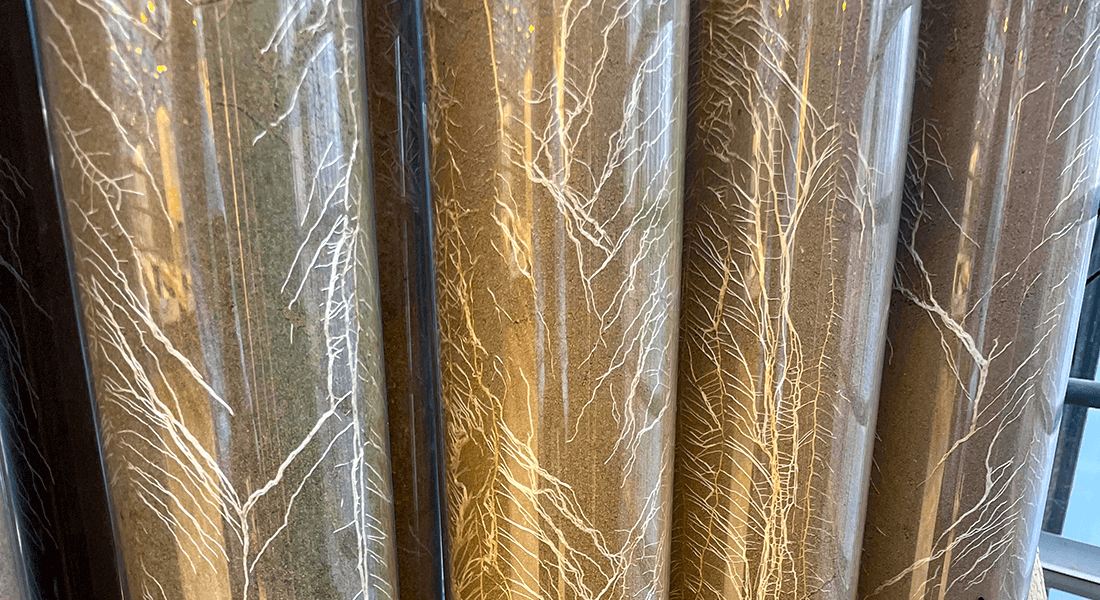
Global warming, droughts and frequent extreme weather events pose a serious threat to global agricultural production. Adaptation to, and mitigation of these changes require a transition of the agricultural production systems, where increasing crop areas for direct human consumption and areas with perennial crops are essential measures. Forage legumes can contribute to the sustainable development of agricultural systems by providing high-protein feed or food, reducing greenhouse gas emissions from agriculture and improving soil fertility. However, forage legumes are susceptible to drought stress, which can affect yield and quality substantially.
The aim of the project ClimateClover is to deliver knowledge on the potential of rooting depth in forage legumes as breeding target for increased drought tolerance enabling the creation of future resilient and sustainable cropping systems. Furthermore, the aim is to elucidate the effect of drought on cultivar differences in biological nitrogen fixation resulting in differences in biomass and protein content.
Results are freely available for all companies active in this sector or subsector and can be purchased by contacting the project leader. Presentation of results are published here. Scientific papers will be submitted for publication by the end of 2026. Both the articles and the project data will be made accessible via links provided on this website by the end of 2026.
Researchers
| Name | Title | Phone | |
|---|---|---|---|
| Dorte Bodin Dresbøll | Associate Professor | +4535333452 | |
| Kristian Thorup-Kristensen | Professor | +4535332216 | |
| Nawa Raj Dhamala | Postdoc | +4535323643 |
Funded by:
 Period: 1-1-2024 to 31-12-2025 (year 2 of 2)