Microbial Genomics and Biodegradation
The Microbial Genomics and Biodegradation group focuses on both basic and applied research into the biological degradation of pollutants, through a combination of microbiology, molecular biology, bioinformatics, and protein chemistry.
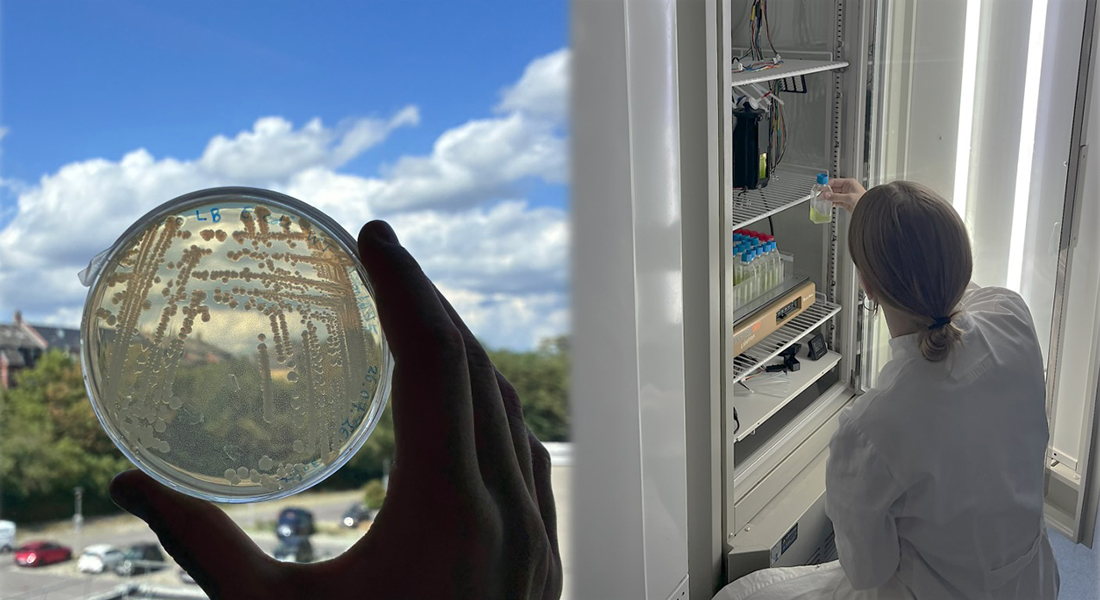
Manmade pollutants are found in all environments, and chemical pollution is one of the 9 planetary boundaries currently exceeded (Introduction of Novel Entities). Bacteria can degrade and remove pollutants from the environment via bioremediation, and this is the focus of the MGB group. We currently focus on one of the biggest such challenges: PFAS or “forever chemicals”. Found in practically every human on earth, they resist biological degradation, hence the “forever” label. Bioremediation could offer a sustainable route to removing PFAS, but it is a major challenge, requiring innovative lab work coupled with state-of-the-art bioinformatics and enzyme design. In the MGB group, we take several approaches to enable PFAS bioremediation.
For more info on the MGB group visit https://ku-mgb.github.io/
Our research asks a simple question with a difficult answer: how do microorganisms break down the chemicals that humans release into the environment, and how can we put that ability to work? We work at the interface of molecular microbiology, bioinformatics, and protein science.
Environmental DNA and metagenome sequencing let us search microbial communities from polluted sites for the organisms and genes behind degradation of xenobiotics – including the rare enzymatic chemistry needed to break the carbon–fluorine bond in PFAS. Candidate genes are then moved into the laboratory, expressed, and characterised biochemically on real pollutants.
Pollutants are not only substrates but also stressors, and a second line of work concerns the toxic effects of pollutants on microorganisms: how exposure shapes growth, physiology, community composition, and the selection of catabolic traits.
Sequence and screening data feed into state-of-the-art protein–ligand modelling. Combining structure prediction, molecular docking, molecular dynamics, and machine learning, we model how candidate enzymes bind and process pollutant molecules, prioritise the most promising variants for testing, and design improved ones – shortening the route from a gene found in nature to an enzyme that works.
Teaching is part of the research. We integrate our own research questions into our teaching, so students work on genuine, unanswered problems with real samples and real data. This often leads on to student projects and theses building on what began in the course. Interested in joining us for a thesis project? Contact Tue at tkn@plen.ku.dk and discuss your own idea or hear more about what projects are available.
- Sapere Aude: Solving microbial degradation of PFAS (active). PFAS resist breakdown partly because the fluoride released when bacteria do degrade them is toxic to the bacteria themselves. This DFF Research Leader project combines machine learning with characterisation of microbial communities to find new PFAS-degrading bacteria and enzymes, and to make them fluoride-tolerant enough to survive the job.
- Mapping the PFAS interactome using photocatalytic proximity labelling (active). Proximity labelling driven by a photocatalyst is used to map which proteins PFAS molecules actually interact with. Supported by the Novo Nordisk Foundation.
- Genetics of PFOS biodegradation (finished 2026). PFAS are no use to bacteria as an energy source, which is part of why they have no natural enemies among microorganisms. This project investigated the genetics behind that absence of natural degradation pathways. Funded by Danmarks Frie Forskningsfond.
- Benedetta Togni
- Sofie Linnea Bollen
- Ioanna Stavroula Mavraki
- Agisilaos Papadopoulos
- Panagiotis Praftsas
Researchers
| Name | Title | Phone | |
|---|---|---|---|
| Asal Forouzandeh | Postdoc | +4535324076 | |
| Shaban Ahmad | Postdoc | +4535335781 | |
| Tue Kjærgaard Nielsen | Assistant Professor - Tenure Track | +4535324188 |